
You are using an out of date browser. It may not display this or other websites correctly.
You should upgrade or use an alternative browser.
You should upgrade or use an alternative browser.
The Actual Music Thread
- Thread starter Mowl
- Start date

Mowl
Member
The Police - 'One World (Not Three)' (1981 - Ghost In The Machine)
This one's a right cracker, with Stewart's drumming taking center stage. In a truly fucking majestic bastardization of reggae and pop/rock themes, he shifts from drops on the third beat of the bar over and into straight 4/4 bridges like he's taking a walk. Flurries of paradiddles on the hi-hats in between the vocal lines keep it steady but greasy and he erupts into drum-breaks in the most surprising of tight spaces, focusing attention away from the song and lyric and off into the whole new paradigm for the cosmos he invented and called his own.
There's only one Stewart Copeland, and without him Sting and Andy's careers might well have taken different turns.
That said, each of the three players have their own unique styles, it's just amazing they all made room for each other in so many three-minute wonders.
Important to remember too that when laying his drums, most of these songs weren't even fully finished, yet the drums ALWAYS went to tape first.
Sting and Andy often changed whole chunks of the original takes, sometimes even deleting their entire input and re-recording them in a different key.
The tension in the studio was often fraught with violence and Sting and Stewart in particular went at each other more often than they ever admitted.
So much talent in one little band of three blokes from radically different backgrounds:
Sting's old man was a shipbuilder from Newcastle, they were a staunch working class family and his first job was as a teacher, first band a jazz orchestra.
Andy was a top session player for years before he met the other two, ten years older - he covered the blues scene as well as many forays into progressive rock.
Stewart was also a progressive rock player with Curved Air before he met Sting, then they began a career as a session rhythm section before starting The Police.
The first album 'Outlandos D'Amour' had a punk element to it, mixed with distant strains of reggae from Stewart which heralded the style of the next album.
'Regatta De Blanc' was the cornerstone of their 'new' sound with a few Number One hits in 'Walking On The Moon' and 'Message In A Bottle'.
'Ghost In The Machine' showed signs of what ultimately became the very thing that destroyed the band: Stewart and Andy trying to remain vital/central.
Then 'Synchronicity' cemented their demise: none of them liked the end result and it broke the band in the end.
The Police were the first pop/rock band that captivated me, I knew I'd never hear another group break all the barriers these three did.
I studied every one of their records and played along with them until my fingers bled, then some more.
There are still elements of Stewart's playing style in evidence on pretty much every record I've played on, such was his influence.
But these days there are multiple renowned drummers copying/lifting Stewart's style, and many tend to fail: they try too hard, and it shows.
Still, I occasionally stick on the albums when I'm painting and sketching, and they still inspire me even today, over forty years since they were laid.
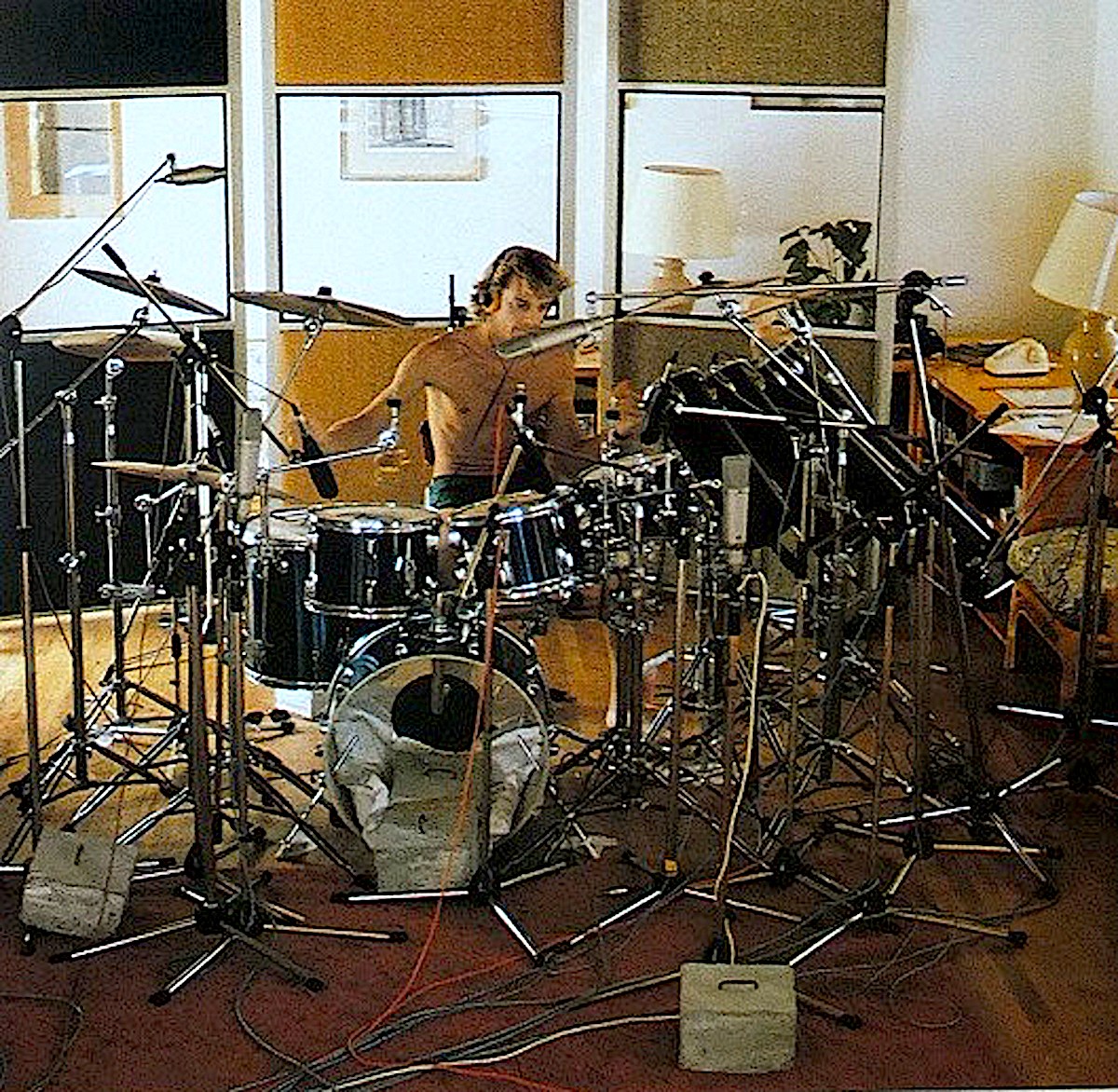
This one's a right cracker, with Stewart's drumming taking center stage. In a truly fucking majestic bastardization of reggae and pop/rock themes, he shifts from drops on the third beat of the bar over and into straight 4/4 bridges like he's taking a walk. Flurries of paradiddles on the hi-hats in between the vocal lines keep it steady but greasy and he erupts into drum-breaks in the most surprising of tight spaces, focusing attention away from the song and lyric and off into the whole new paradigm for the cosmos he invented and called his own.
There's only one Stewart Copeland, and without him Sting and Andy's careers might well have taken different turns.
That said, each of the three players have their own unique styles, it's just amazing they all made room for each other in so many three-minute wonders.
Important to remember too that when laying his drums, most of these songs weren't even fully finished, yet the drums ALWAYS went to tape first.
Sting and Andy often changed whole chunks of the original takes, sometimes even deleting their entire input and re-recording them in a different key.
The tension in the studio was often fraught with violence and Sting and Stewart in particular went at each other more often than they ever admitted.
So much talent in one little band of three blokes from radically different backgrounds:
Sting's old man was a shipbuilder from Newcastle, they were a staunch working class family and his first job was as a teacher, first band a jazz orchestra.
Andy was a top session player for years before he met the other two, ten years older - he covered the blues scene as well as many forays into progressive rock.
Stewart was also a progressive rock player with Curved Air before he met Sting, then they began a career as a session rhythm section before starting The Police.
The first album 'Outlandos D'Amour' had a punk element to it, mixed with distant strains of reggae from Stewart which heralded the style of the next album.
'Regatta De Blanc' was the cornerstone of their 'new' sound with a few Number One hits in 'Walking On The Moon' and
'Message In A Bottle'.'Ghost In The Machine' showed signs of what ultimately became the very thing that destroyed the band: Stewart and Andy trying to remain vital/central.
Then 'Synchronicity' cemented their demise: none of them liked the end result and it broke the band in the end.
The Police were the first pop/rock band that captivated me, I knew I'd never hear another group break all the barriers these three did.
I studied every one of their records and played along with them until my fingers bled, then some more.
There are still elements of Stewart's playing style in evidence on pretty much every record I've played on, such was his influence.
But these days there are multiple renowned drummers copying/lifting Stewart's style, and many tend to fail: they try too hard, and it shows.
Still, I occasionally stick on the albums when I'm painting and sketching, and they still inspire me even today, over forty years since they were laid.

Such an underappreciated band, proper indie rock music. A dozen Manchester area bands with potential likely flew under the radar with the advent of Loudmouth-Liam and the mid-90s media's fixation on Brit-pop.
What's the Story is just a wall of noise from beginning to end, like some low-fi (instrumentally at least) black metal cassette produced in the box room of an 18 year old kid living in Oslo.
What's the Story is just a wall of noise from beginning to end, like some low-fi (instrumentally at least) black metal cassette produced in the box room of an 18 year old kid living in Oslo.
Mowl
Member
 AN4: in continuance of our chat about moving stars in the sky:
Question: What is a satellite?
Answer: Lou Reed 'Satellite Of Love'
Mowl
Member
I met Pól Ó Braonáin of Clannad one night in Kehoe's Pub on Anne Street. He was in to meet my African/Irish pal for his monthly supply and we got to talking. I mentioned that the contrabass was by far my favourite instrument, but also one that I only ever got to play either in music stores or else in production studios for sessions. He said he had three in total: one that never left the studio (a very old Czech-built bass) and two others for road work. He was very open and informative about his set-up and when I mentioned that I found his style awesome he was surprised: he said he used contrabass because it melted into the background so easily, but I said that this only made it all the more attractive to my ear because you had to listen and dissect everything in the mix to really hear what the bass was doing. Flattery isn't my business so I didn't butter him up, still he was kind and open enough to ask for my number and email address that we might meet again and maybe even have a chance to play together.
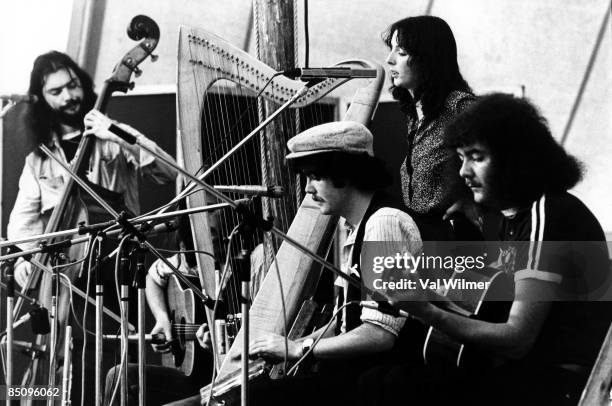
After that, I dug even deeper into Clannad's material. I'd been a fan since my teenage years and loved jamming along to the earlier albums when they used Paul Moran on drums. Paul played with everyone, he was a go-to session player who could lay a few takes after one or two listens to the track. I caught him live many times with The Bogey Boys, Freddie White Band, and he also did regular clinics at McCullough-Piggott's music shop along Suffolk Street before they moved to a far smaller premises on Sth Gt George's Street. He played and endorsed Yamaha drums and used a 9000 Recording Series model for most of his sessions. He has a wonderful stroke, very gentle but also highly dynamic: he's a great listener and always played for the song rather than from the ego or his amazing sounding kit.
Sadly, Moran's time on the road with the globally touring 'Riverdance - The Show' resulted in him suffering severe ear damage due to the high volume of the stage rigs and he developed tinnitus which led to the end of his musical career. He sued Riverdance and won a measly €75,000 in compensation. Later he found other work as a cleaner at Bord Gais. Quite a severe blow, it led to severe depression which further debilitated his musical ability and proficiency.
He played on this one, which captivated me with its 6/8 rhythm as well as 'In A Lifetime' which also featured Bono from U2 on dual vocals.
Clannad: 'Thíos Fá'n Chósta'
After that, I dug even deeper into Clannad's material. I'd been a fan since my teenage years and loved jamming along to the earlier albums when they used Paul Moran on drums. Paul played with everyone, he was a go-to session player who could lay a few takes after one or two listens to the track. I caught him live many times with The Bogey Boys, Freddie White Band, and he also did regular clinics at McCullough-Piggott's music shop along Suffolk Street before they moved to a far smaller premises on Sth Gt George's Street. He played and endorsed Yamaha drums and used a 9000 Recording Series model for most of his sessions. He has a wonderful stroke, very gentle but also highly dynamic: he's a great listener and always played for the song rather than from the ego or his amazing sounding kit.
Sadly, Moran's time on the road with the globally touring 'Riverdance - The Show' resulted in him suffering severe ear damage due to the high volume of the stage rigs and he developed tinnitus which led to the end of his musical career. He sued Riverdance and won a measly €75,000 in compensation. Later he found other work as a cleaner at Bord Gais. Quite a severe blow, it led to severe depression which further debilitated his musical ability and proficiency.
He played on this one, which captivated me with its 6/8 rhythm as well as 'In A Lifetime' which also featured Bono from U2 on dual vocals.
Clannad: 'Thíos Fá'n Chósta'
Mowl
Member
Alri' there, Jimmah?
This one's for you: a little twelve-plus minute ditty to colour up your dull day.
Jambo, can you tell me what this piece does for you?
It's just music, it isn't a trick or a trap, just a simple question.
How does this make you feel, and think, and wonder?
What ARE these guys up to, in your esteemed opinion?
You can see they aren't reading their parts, right?
So where's it all coming from and where the fuck's it going?
In your opinion.
This one's for you: a little twelve-plus minute ditty to colour up your dull day.
Jambo, can you tell me what this piece does for you?
It's just music, it isn't a trick or a trap, just a simple question.
How does this make you feel, and think, and wonder?
What ARE these guys up to, in your esteemed opinion?
You can see they aren't reading their parts, right?
So where's it all coming from and where the fuck's it going?
In your opinion.
Share: